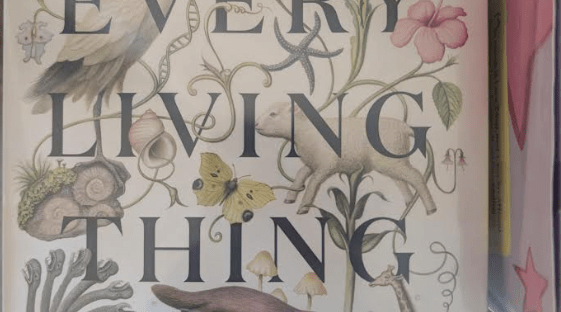
I read this long long book. It’s about Carl Linnaeus, the Swedish botanist. At least half the book is about him. The other half is about another scientist at the same time, a French man called Buffon. (An unfortunate name, huh? Even worse, Buffon is not his original name, it was a name he picked for himself.)
Well, so when I was in middle school, we learned all about Linnaeus, and how he classified all the plants and animals, and gave them Latin names. I thought it was really cool he was Swedish, but at the same time, I also thought, big deal? So he named and classified things. That’s so boring in comparison to the other big discoveries we learned about.
But then over the years, I learned more about him and my appreciation grew. I read some books about him that I found in libraries in Sweden, and I learned all these nice things, like these long journeys on horseback he took to the north of Sweden, and how he loved flowers as a kid, and everything sounded so nice and just lovely.
Well, this book is not quite as flattering. I don’t think the author likes Linnaeus at all, he likes the other guy, Buffon. Both Buffon and Linnaeus were coming up with ways to understand life on Earth. They were developing their own theories and methods, and of course, we know that Linnaeus “won” because he’s who we all learn about, whereas I’d never heard of Buffon before this book. But you come out of the book sort of wishing it had been the other way around.
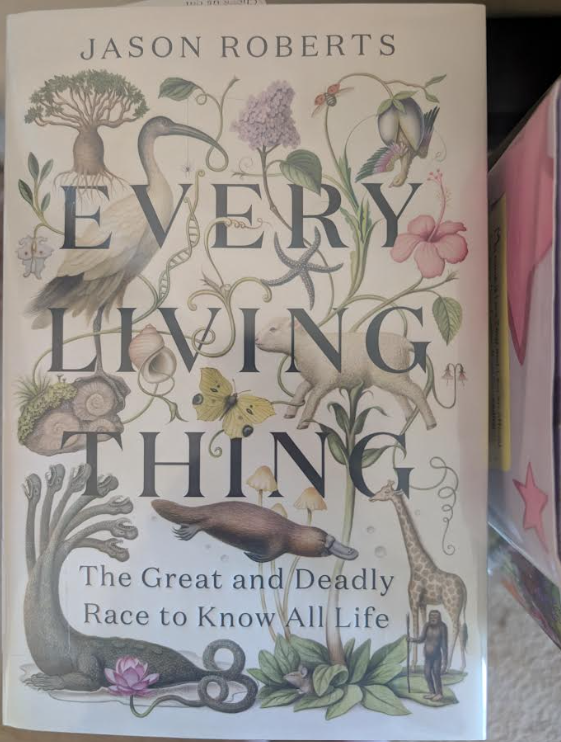
It was a pretty interesting book overall. It wasn’t just about Buffon and Linnaeus, there were lots of other historical figures in there, too (mostly men). I really liked when my old friends that I’d learned about in middle school popped up, like Anton von Leeuwenhoek and his microscopes, and Gregor Mendel and his pea plants. Throughout my life I have read much more fiction than non-fiction, so I do tend to look a bit more askance at science and history books. But in spite of some places where it got pretty dense, I thought it was pretty good regardless.
Oh, and there were some other parts of the book that also reminded me of middle school science class. In eighth grade, when we learned about Darwin and evolution, we first learned that originally, there was this oh-so-laughable theory that the way species had adapted was because they would strive for the traits they needed to survive. Like, giraffes had looked up at the leaves in the trees and reached and reached and reached their necks, and finally hyper-extended them.
So this popped up in “Every Living Thing” as well. Apparently, everyone gets taught that one specific theory of the giraffes. I found out a French man named Lamarck came up with that theory, except not really. Apparently, there may have been a slight mis-translation of his French writings. So I got to learn a little about all these theories that people came up with in the 1700s. It was really interesting to see how theories built on each other, how they fought with each other, slighted each other, and how slowly, very slowly, we rambled about to where we are now.
Then, at the very end of the book, the author basically says that we should get rid of the Linnaean classifications altogether, and instead link everything using DNA and also rethink what a species even is. Well, that reminded me that I myself once upon a time was a student in a geology department, and thank goodness, when one of the nicest professors there was retiring, I went and interviewed him, and I learned so much! I wrote this article about it, and a big part of the article was all about the debate between classifying using DNA, versus classifying using the fossil record.
You know, I was just bumbling about at the time and I don’t even know on what whim I went to talk to him, but I’m so glad that I did. What an interesting amount of research he had done! What interesting stories he told. His research wasn’t really related to my research at all, so I didn’t need to talk to him; and it’s a little scary how with just a little lack of initiative, you can miss out on so much riches.


1 thought on “Every Living Thing”