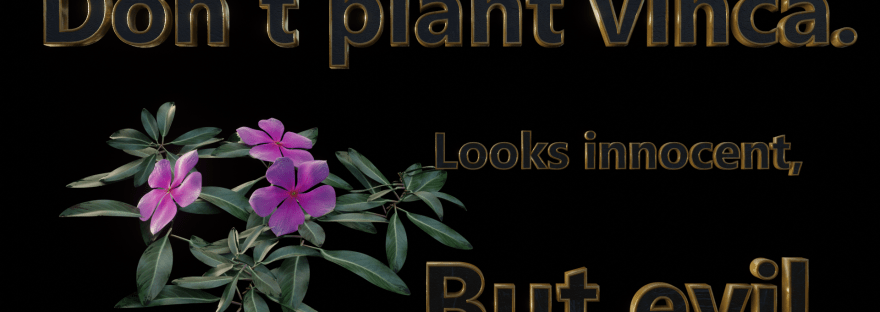
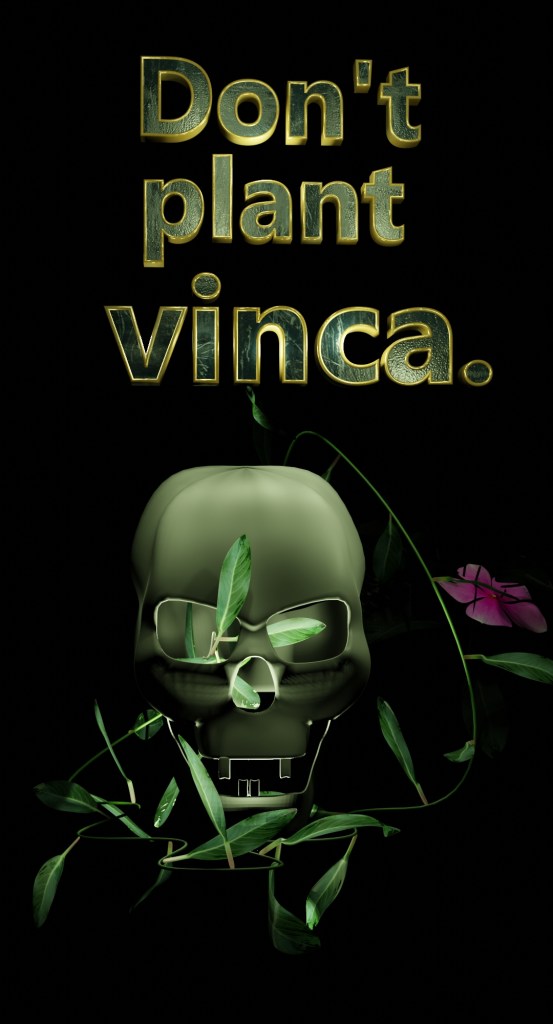
Vinca is an invasive plant. I learned about it when I used to go volunteer with a nature group. Please don’t plant it, it wrecks natural ecosystems:
The group I was volunteering with would help to keep a forest at UNC Chapel Hill healthy. There was an old couple who would always volunteer there. This couple had once spent many weeks removing woodland flowers in another town from a spot slated to be steamrolled in deference to a new mall. It was a “plant rescue”. And now they were volunteering at the Chapel Hill forest. They liked to tell us about flowers native to North Carolina like bloodroot, spring beauties, trilliums, Jacks-in-the-pulpit, may-apples, and “little brown jugs”, aka, wild ginger.
It reminded me of the descriptions that Lucy Maud Montgomery wrote of the old-fashioned gardens where her heroines on Prince Edward Island lived. Like this description from Anne of Green Gables:
The Barry garden was a bowery wilderness of flowers which would have delighted Anne’s heart at any time less fraught with destiny. It was encircled by huge old willows and tall firs, beneath which flourished flowers that loved the shade. Prim, right-angled paths neatly bordered with clamshells, intersected it like moist red ribbons and in the beds between old-fashioned flowers ran riot. There were rosy bleeding-hearts and great splendid crimson peonies; white, fragrant narcissi and thorny, sweet Scotch roses; pink and blue and white columbines and lilac-tinted Bouncing Bets; clumps of southernwood and ribbon grass and mint; purple Adam-and-Eve, daffodils, and masses of sweet clover white with its delicate, fragrant, feathery sprays; scarlet lightning that shot its fiery lances over prim white musk-flowers; a garden it was where sunshine lingered and bees hummed, and winds, beguiled into loitering, purred and rustled.
Lucy Maud Montgomery
Spring beauties and bloodroot and little brown jugs seemed like just the sorts of flowers that Lucy Maud Montgomery would have written into her books.
However, these flowers are in danger! During our volunteer sessions, we spent a lot of time uprooting about English ivy and vinca (also known as periwinkle). These are both invasive plants in North Carolina, and when they get their vermin-like vine-grip on a forest, they basically take over and kill all the other woodland flowers and plants.
So volunteering with that group was great. But as they say, (at least, as they said back in the day of Anne of Green Gables), “doctor’s wives are left untreated, and the shoemaker’s wife goes barefoot.” I was busy uprooting the vinca and English ivy at my university, and I hadn’t checked my own backyard back home. When I finally did, several years later, imagine my dismay when I realized the whole back edge was overrun with vinca. We never planted it, I think the crop was a hold-over from the previous owners. But, neither had we done a good job taking care of that far boundary, and it had become a jungle of vinca. Vinca, vinca, everywhere.
I had to spend the whole pandemic pulling it out. In fact, I started even before the pandemic started.
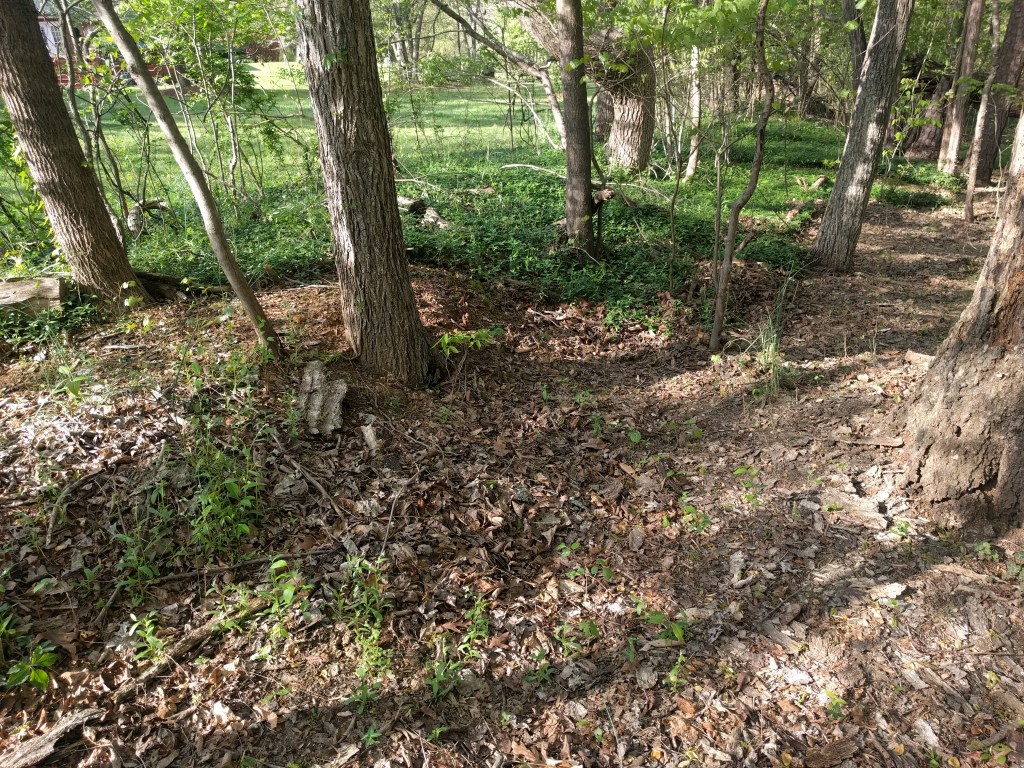
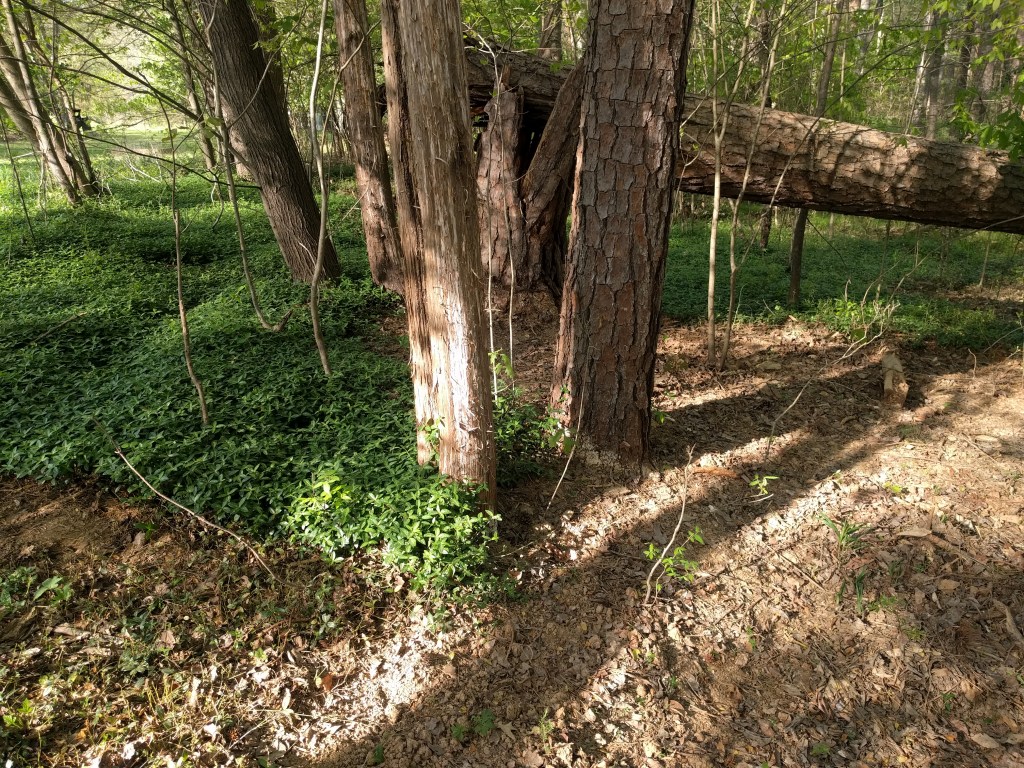
And yet, sometimes when I walk about, I see that our very neighbors are unabashedly planting new crops of vinca in their front yards!
And there’s vinca at the place where I work.
There’s just too much vinca in the world.
So I would like to encourage everyone to protect ecosystems, and DON’T PLANT VINCA!

 mejshasan.com
2 thoughts on “Don’t plant vinca”